Close faster.Reconcile cleaner.
Defend every financial action.
Pryme Intelligence gives finance teams governed AI agents for close orchestration, reconciliations, vendor onboarding, AP triage, variance commentary, and audit-ready execution.
Connect → Codify → Run → Audit.
Turn the parts of close, control, and reporting that depend on people copying numbers between systems into governed work that runs on its own.
Connect
Point Pryme Intelligence at the systems your finance team already runs on — ERP, AP automation, planning tools, bank feeds, and the warehouse behind them. Pryme Intelligence keeps the data scoped to the right roles and refreshed on the cadence you control.
Codify
Describe the workflow in plain English in the Chat-Based Agent Builder — reconcile a bank pair daily, route vendor onboarding gaps, draft variance commentary — and Pryme Intelligence assembles the tools, permissions, policy defaults, and escalation path.
Run
Deploy the agent to the surface where the work already lives — Slack for the team, an internal finance tool, a customer-facing channel, or the Workspace API for engineering. The same governance rail follows every action.
Audit
Every read, draft, approval, post, and escalation is recorded with the data used, the reasoning path, the human approver, and the system affected. Internal Audit and external auditors review the same trail directly.
What it looks like running on your finance stack.
The same Workspace carries every Financial Operations agent from setup, through pilot, to governed execution across close, AP, treasury, and reporting.
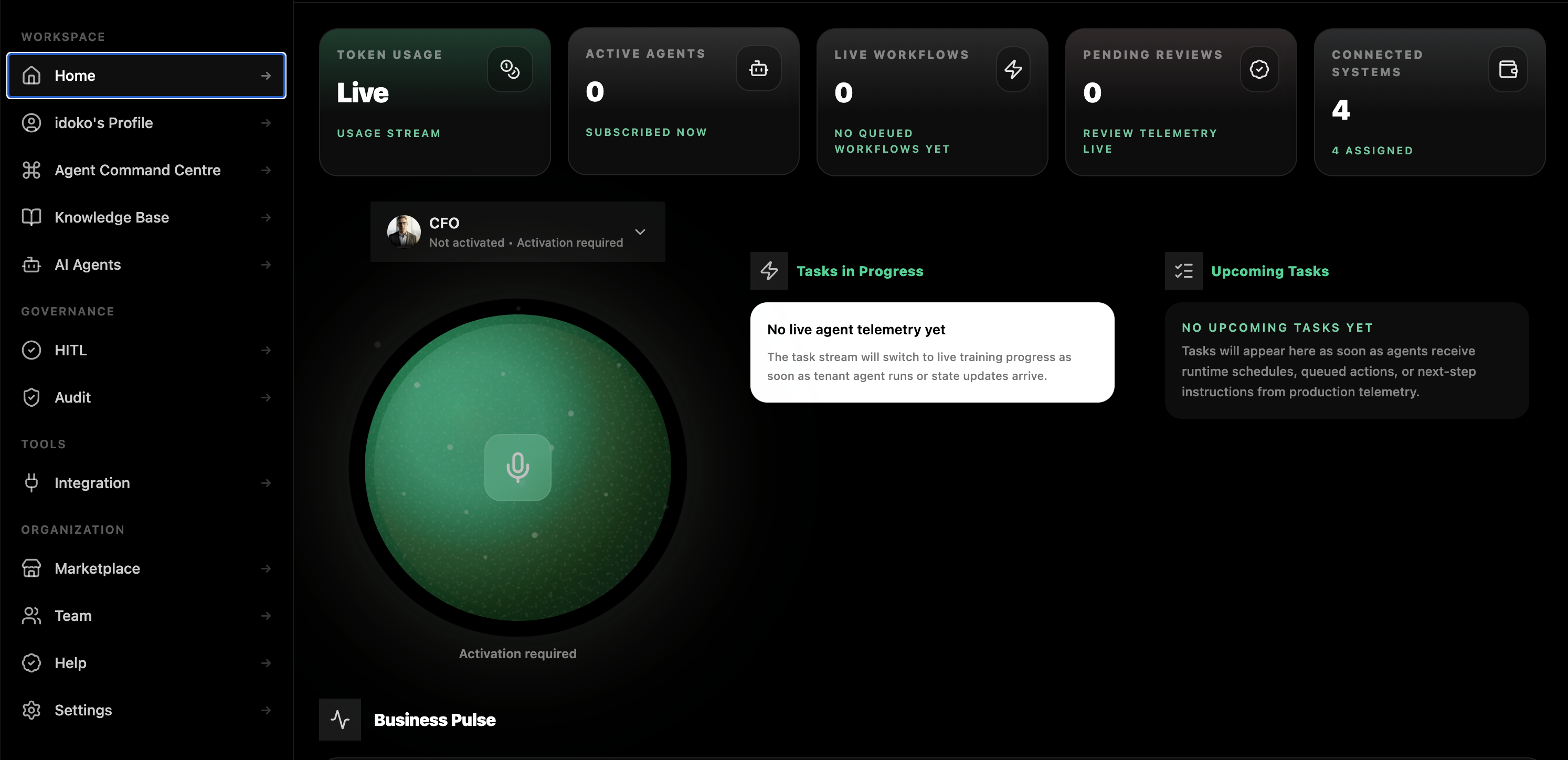
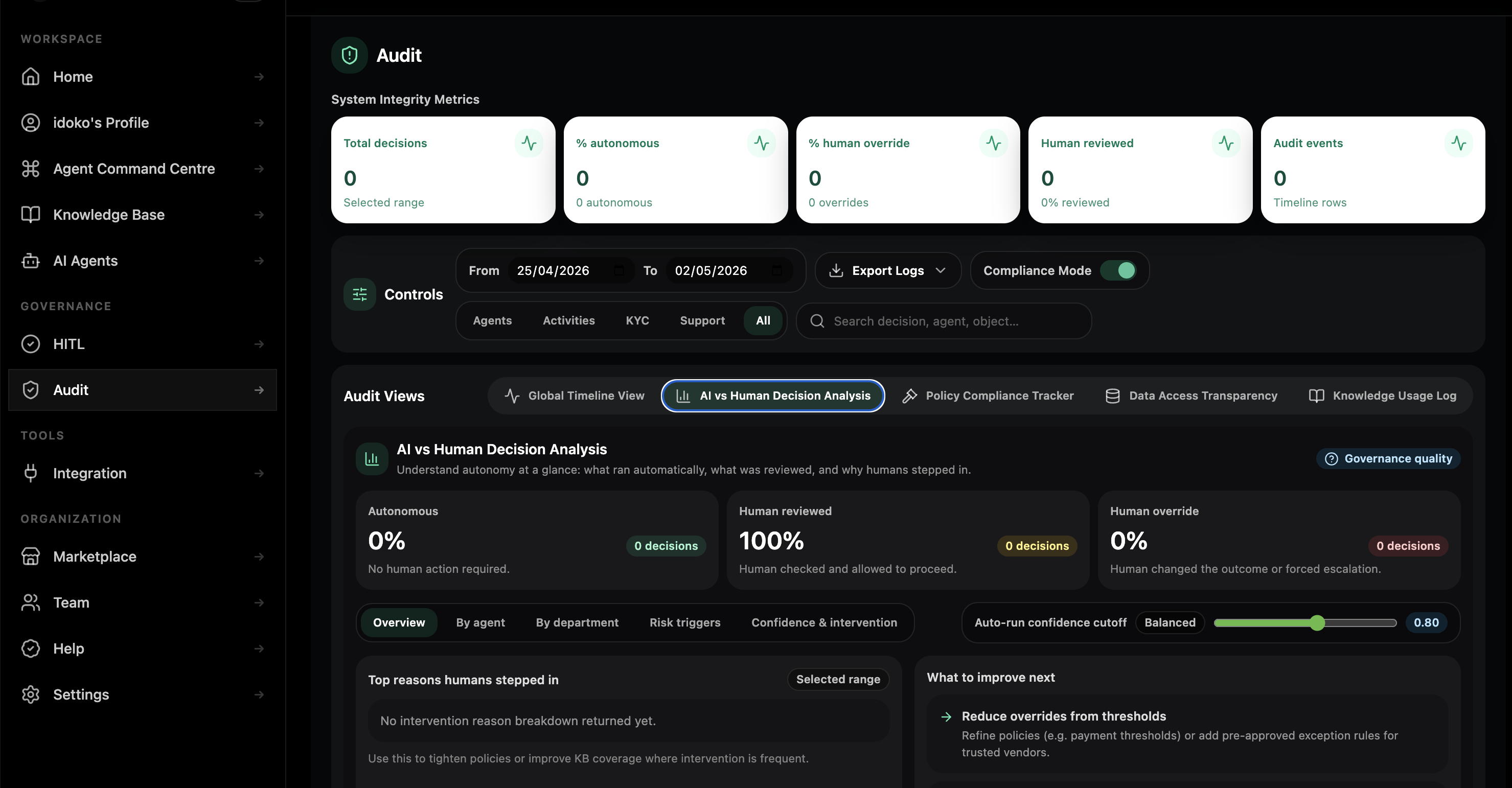
Two pre-trained agentsFive blueprints ready to deployMore on the way.
Two agents come pre-trained — claim them and they activate on your Workspace in minutes. Five blueprints ship as pre-configured starting points in the chat builder, ready to deploy on your data the same day. The rest are on the roadmap your design partners are shaping.

CFO Agent
Cash oversight, finance approvals, and executive-ready operating signal in one governed finance agent.
- Summarises cash position, approvals, and exception queues across the Workspace.
- Flags threshold breaches and routes them against the approval chain you set.
- Drafts board-ready finance updates with source-backed links into the audit trail.

Accountant Agent
Reconciliations, month-end hygiene, and exception handling for accounting teams that need speed without losing control.
- Matches transactions and drafts reconciliation notes with the right tolerance defaults.
- Routes exceptions, missing evidence, and close blockers to the named owner.
- Keeps every action, override, and follow-up attached to a searchable audit trail.
Day one, week two, quarter end.
Day one
A Controller spins up a Workspace, activates the Reconciliation Agent on one bank pair, and watches the morning exception queue land already prioritised.
Week two
The team adds Vendor Onboarding and AP Triage. New vendors move faster, tax-form gaps are caught earlier, and Internal Audit starts reviewing the live action log instead of screenshots.
Quarter end
Finance owns a fleet: close orchestration, reconciliation, vendor onboarding, AP triage, and variance commentary — each with its own approval policy and a single query surface across all actions.
Why an agent platform — not just a script, a chatbot, or another spreadsheet.
Most finance teams have already tried at least one of the alternatives below. Each solves something. None solve audit-defensibility at scale.
Audit-defensible by design.
Pryme Intelligence separates the four concerns finance teams otherwise cobble together — tenant context, knowledge layer, governance rail, and runtime — so finance can adopt agents without rewriting the control environment around them.
Tenant isolation per Workspace with region-scoped deployment options
SSO, SCIM, and role-based access aligned to your finance hierarchy
Approval engine mapped to your delegation of authority and segregation-of-duties model
Immutable, queryable, exportable audit trail ready for internal audit and external sampling
Built for the finance leaders who have to defend the result.
CFO and finance leadership
You need AI that removes hours from the close without taking control out of finance's hands. Pryme Intelligence is designed to fit the control framework you already defend.
Controllers and shared services leaders
You need fewer late nights, fewer reconciliation surprises, and a vendor onboarding cycle measured in hours rather than weeks.
Internal audit and SOX compliance
You need to know that the adoption of agents adds evidence to the control environment instead of introducing invisible behaviour into it.
FP&A leaders
You need variance commentary drafted before the close window closes so your team spends time interpreting results, not assembling the narrative.
What changes in the first quarter.
Targets below describe the first 90-day direction for a finance team. The actual lift depends on starting state, systems, and workflow scope.
Bring a real close.We'll show you what Pryme Intelligence does with it.
Thirty minutes. One workflow you actually run. We’ll deploy a Pryme Intelligence agent on it live and walk through the audit trail it produces.
Questions finance leaders ask first.
Will an agent post journal entries without my Controller's approval?
No. Posting authority is something you grant, not a default. Finance agents run read-only by default and only post when a named approval policy allows it.
How does the audit trail satisfy SOX and external audit?
Every agent action is recorded with the data used, the output produced, the approver, the timestamp, and the affected system of record. Auditors query the trail directly or export scoped evidence packs.
What happens at month-end if an agent gets confused?
It escalates with context. Pryme Intelligence is configured to surface uncertainty rather than guess, routing the item to the named human with source data and a recommended next step attached.
Where does our financial data live?
Inside your Pryme Intelligence Workspace, isolated per tenant and encrypted in transit and at rest, with region-scoped deployment options configured during onboarding.
Does Pryme Intelligence integrate with our ERP and finance stack?
Yes. Pryme Intelligence is designed to sit above the systems finance already uses — ERP, AP automation, planning, treasury, data warehouse, and custom APIs — with the same governance rail applied across them.
Can we start with one workflow and expand later?
Yes. Most teams begin with one well-bounded workflow such as reconciliation, vendor onboarding, or variance commentary, then add more agents into the same Workspace once the first workflow is live.