Solutions · Sales & Growth
Qualify faster.Forecast cleaner.
Sales agents your CRO can defend in QBR.
Pryme Intelligence gives sales teams governed AI agents that research accounts, draft outbound, keep CRM current, surface deal risk, run forecast QA, and watch every renewal — without putting an outbound send or discount approval in an agent’s hands.
Research → Qualify → Advance → Forecast.
The four-pillar pattern Pryme Intelligence applies to every Sales & Growth workflow: assemble context, qualify the work, advance the deal cleanly, and challenge the forecast before the board does.
Research
Before any rep walks into a meeting, Pryme Intelligence assembles the account brief — recent news, hiring, funding, tech stack, org structure, prior conversations, and competitive context — from the systems you already pay for.
Qualify
Inbound leads land enriched with intent, fit, contact data, and routing recommendations. Outbound drafts are written in the SDR’s voice, but the SDR still owns the send and the judgment.
Advance
As deals move, Pryme Intelligence drafts follow-ups, keeps CRM current, and prepares the deal-desk brief when pricing, approvals, or redlines are needed. The agent recommends; the human approves.
Forecast
The RevOps agent challenges every soft commit with activity, champion, buyer, meeting, and stage-time evidence attached. The renewal-risk path does the same at the back of the funnel.
What it looks like running on your sales stack.
The same Workspace carries every sales agent from setup, through pilot, to governed execution across CRM, sales engagement, conversation intelligence, deal desk, and renewal motion.
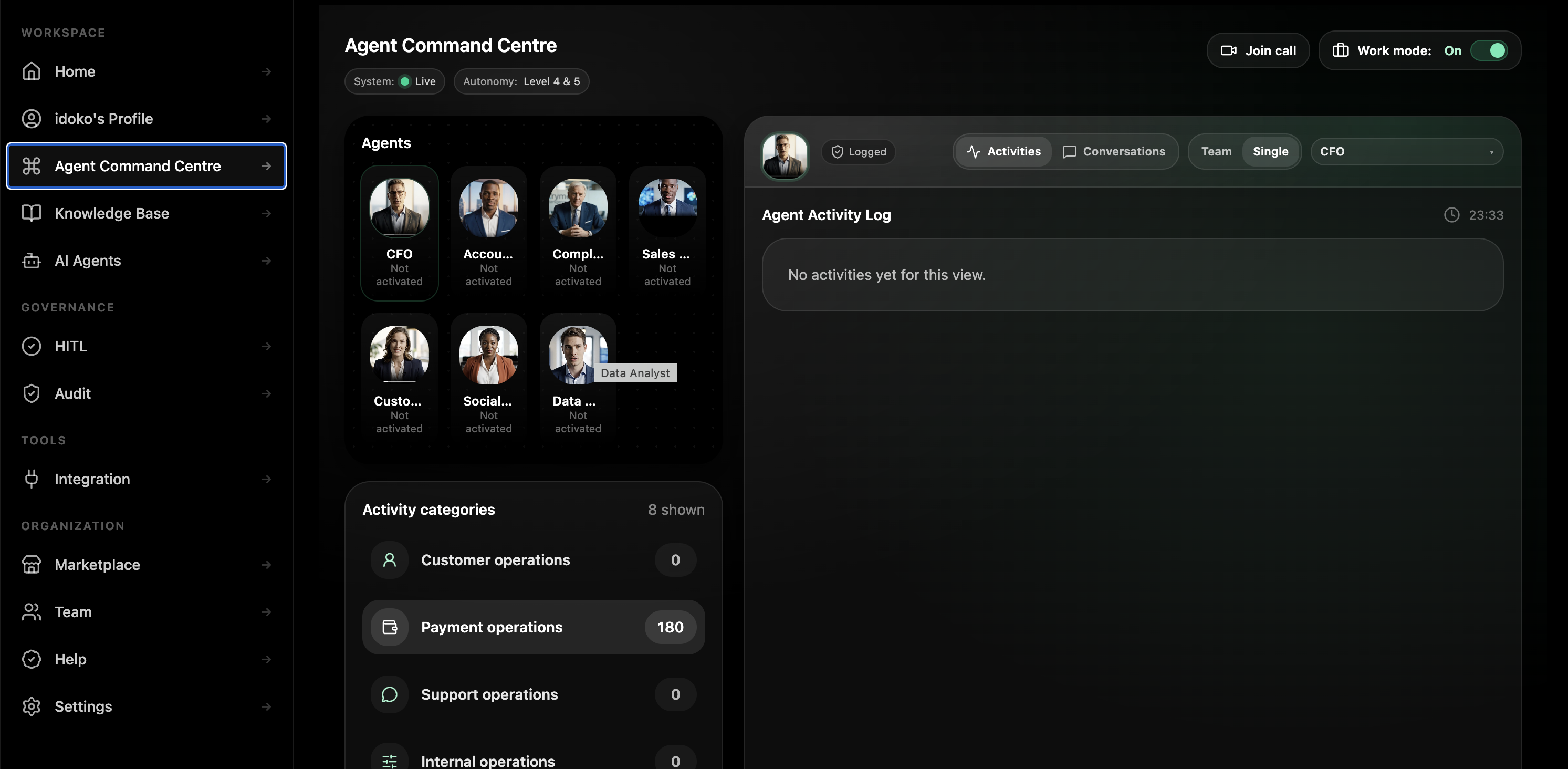
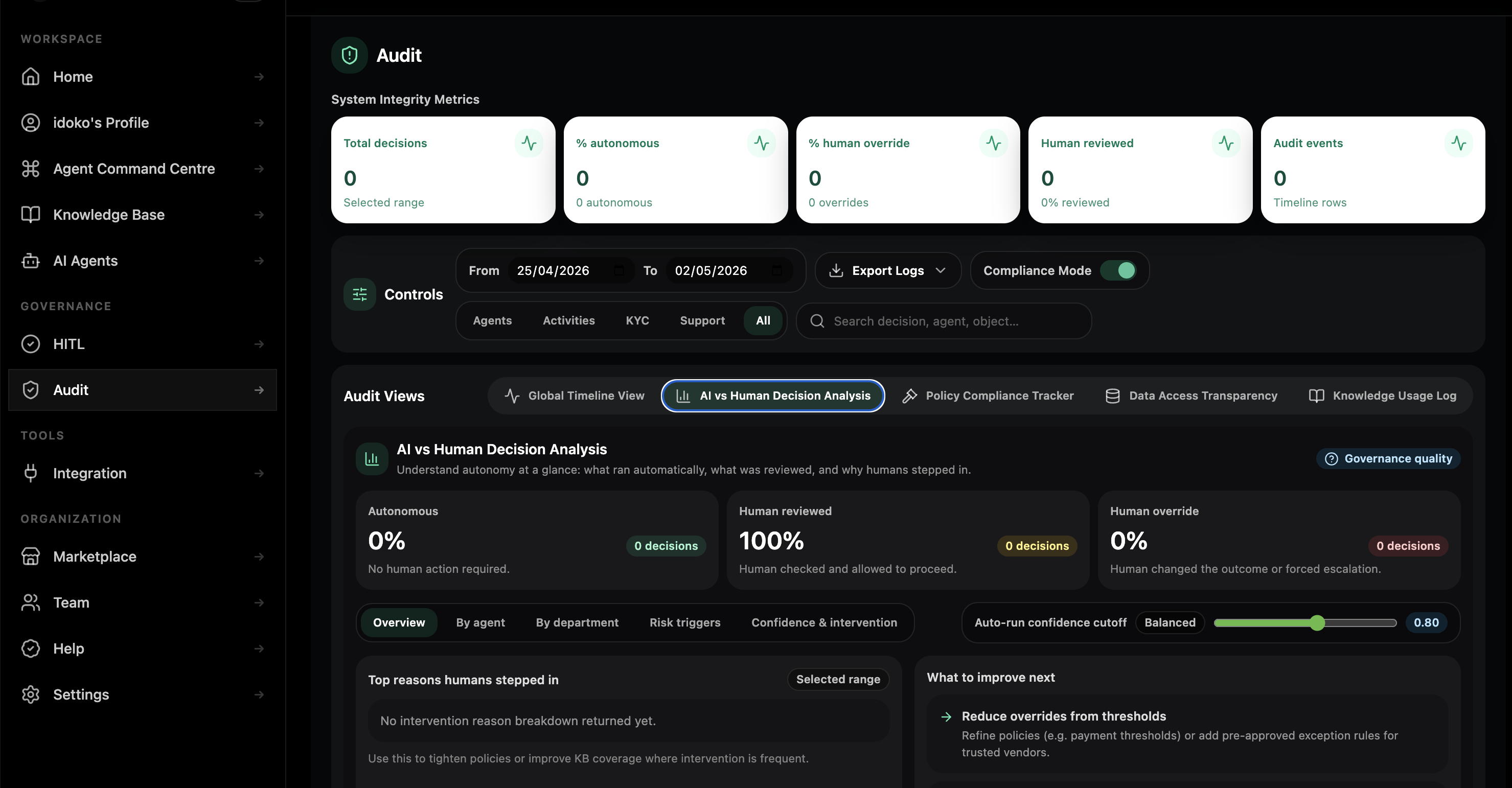
Two pre-trained agents. Five blueprints ready to deploy. Two with enterprise setup.
Two agents come pre-trained and activate on your Workspace in minutes. Five blueprints ship as pre-configured starting points in the chat builder, ready to deploy on your data the same day. Complex revenue-model and ABM orchestration paths ship with the solutions team alongside you.

Sales Rep Agent
Acts as a senior AE’s right hand. Researches accounts, drafts outreach, prepares pre-meeting briefs, updates CRM after calls, and drafts the next-step follow-up in the rep’s voice.
- Builds the pre-meeting brief with prior conversation context, account signals, and the questions the rep should ask next.
- Drafts outbound and follow-up messages, but leaves send authority with the human owner.
- Keeps CRM notes, fields, and next steps current without RevOps cleaning up after the week ends.
Revenue Operations Agent
Acts as a senior RevOps analyst. Maintains pipeline hygiene, runs forecast QA, flags stage-time drift, and drafts the rep-by-rep questions for the forecast call before the CRO asks them.
- Flags soft commits with stale activity, missing meetings, weak champions, and incomplete buying signals.
- Drafts the weekly forecast call agenda with the exact deals that need challenge and why.
- Surfaces renewal risk early enough for sales and CS to move before the quarter-end save motion compresses.
Day one, week two, quarter end.
What adoption looks like when one real forecast call becomes a governed revenue fleet running across research, qualification, deal desk, and renewals.
Day one
A VP RevOps spins up a Workspace, hires the Account Researcher Agent for the AE team’s top accounts, and watches it draft the pre-meeting briefs before the morning stand-up.
Week two
The team adds the Revenue Operations Agent on the Friday forecast call. Soft commits get flagged before the call starts, not after the quarter slips.
Quarter end
Sales owns a governed fleet across research, lead enrichment, deal desk, forecast QA, and renewal risk, while the CIO crosses multiple single-purpose tools off the renewal calendar.
Why an agent platform — not an AI SDR vendor, a revenue-intelligence tool, or a CRM-native AI add-on.
Most sales teams already pay for at least two of the alternatives below. Pryme Intelligence’s advantage is that one Workspace covers the whole motion instead of stitching one vendor for outbound, another for forecast, another for call analysis, and another for the CRM.
| Capability | Pryme Intelligence | AI SDR / outbound | Revenue intelligence | CRM native AI |
|---|---|---|---|---|
| Setup time | Days | Weeks | Months | Quarters |
| Scope of revenue motion covered | Research, qualify, advance, forecast, renew | Top of funnel only | Forecast and call analysis only | Within their suite only |
| Brings full account context | Yes — CRM, product usage, intent, and prior conversations | Mostly intent and contact data | Read-only inside the call layer | Within their suite only |
| Audit trail of agent decisions | Immutable, exportable, queryable | Limited | Per-tool logs | Per-suite logs |
| Approvals on sensitive actions | Built-in policy engine with named approvers | Limited; mostly auto-send | N/A — read-only | Within suite limits |
| Adapts to a new product, segment, or playbook | Update the agent in chat in minutes | Vendor template change | Vendor release cycle | Vendor release cycle |
| Sales motion runs end-to-end | Yes — one Workspace | No — outbound only | No — insight only | No — CRM only |
| Same platform as your finance, compliance, and support agents | Yes — one Workspace | No — single-purpose | No — single-purpose | No — CRM-bound |
| Cost shape | Subscription + usage | Per-seat + per-message | Per-seat | Per-seat + AI add-on |
QBR-defensible by design.
Pryme Intelligence separates the four things revenue teams usually stitch together by hand: tenant context, a knowledge layer across the revenue stack, a governance rail for sensitive actions, and a runtime that logs every send, update, approval, and escalation.
Built for the revenue leaders who have to defend the number.
CRO / Chief Revenue Officer
You need a forecast that holds and a sales motion that scales without burning out the rep base. Pryme Intelligence lets you adopt AI without adding another single-purpose vendor to the stack.
VP Sales / VP Revenue Operations
You need a CRM that is current by Friday and a forecast call that does not ambush you at the end of the week. Pryme Intelligence runs the work the team should have done and surfaces what the rep will not say out loud.
Head of SDR / Sales Development
You need SDRs doing the parts of the job AI cannot do well at scale: personalised judgment, human conversation, and account prioritisation. Pryme Intelligence handles the research, enrichment, and CRM hygiene around them.
Head of Customer Success / Renewals
You need renewal risk surfaced before the customer asks for a discount. Pryme Intelligence flags the risk, drafts the save motion, and gives your team time to act before the quarter closes in on you.
What changes in the first quarter.
Targets below are typical for sales teams in the first 90 days. Your numbers depend on motion, starting hygiene, and the shape of the funnel — bring a real pipeline and we’ll model the lift on your data.
| Metric | Today (typical) | With Pryme Intelligence (target) |
|---|---|---|
| AE research time per account | 30–50% of the week | Pre-assembled before the meeting |
| Forecast accuracy | ±10–25% | ±5% within 30 days of close |
| CRM stage freshness | Stale by Friday | Current within 24 hours |
| SDR meeting-booked rate | Trending down under template saturation | Lifted through account-personalised outbound |
| Deal-desk turnaround | 2–5 days | Same-day for in-policy requests |
| Renewal risk lead-time | 30 days | 90 days, with the save motion drafted |
| New AE ramp to quota | 6–9 months | 30–50% faster with research and follow-up automated |
Bring a real pipeline.We'll show you what Pryme Intelligence does with it.
Thirty minutes. One forecast call you actually run. We’ll deploy a Pryme Intelligence agent on it live, surface the soft commits before you do, and walk through the audit trail it produces.
Questions revenue leaders ask first.
Can a Pryme Intelligence agent send a sales email or change a deal stage without my supervisor’s approval?
No. Outbound-send authority, CRM-stage-change authority, and pricing-action authority are permissions you grant, not defaults. Each action runs under the Workspace governance rail and routes to the named human approver your existing process already uses.
How does the audit trail work for sales activities and regulated-industry sales?
Every agent action — research, draft, send, log, change, escalate — is recorded with the data, the prompt, the model output, the approver, the timestamp, and the affected system. In regulated sales environments, the trail maps directly to the supervision evidence your team already has to defend.
What happens when the agent doesn’t know how to qualify a lead?
It escalates with context instead of guessing. When signals conflict or a lead falls outside the documented ICP, the agent drafts the brief, shows what it knows and what it tried, and routes to the named SDR or AE for judgment.
Where does our CRM data go?
Inside your Pryme Intelligence Workspace, isolated per tenant and encrypted in transit and at rest. Agents read through your existing CRM and warehouse access model rather than training shared systems on your pipeline data.
Does Pryme Intelligence integrate with our existing sales stack?
Yes. The platform is designed to sit above Salesforce, HubSpot, Pipedrive, Outreach, Salesloft, Gong, Chorus, CPQ, CLM, marketing automation, enrichment tools, product analytics, and custom APIs with the same governance rail applied across them.
Can the agent actually replace SDRs or drive pipeline like 11x and Artisan claim?
Not in the way those vendors describe it. Pryme Intelligence’s position is that AI should do the boring 60–70% of the SDR role — research, enrichment, brief drafting, sequence drafting, CRM updates, and follow-up writing — so SDRs do the part AI still does poorly at scale: personalised outreach and meaningful conversation.
How is this different from Clari, Gong, Salesforce Einstein, or AI SDR tools?
Pryme Intelligence covers the whole revenue motion with one platform, routes sensitive actions through a configurable policy engine that maps to your own delegation of authority, and runs in the same Workspace your finance, compliance, customer support, and operations teams already use. One vendor, one Workspace, one audit trail across the firm.