Solutions · HR & Admin
Answer faster.Onboard cleaner.
HR agents your CHRO can defend.
Pryme Intelligence gives HR teams governed AI agents that answer policy questions in seconds, drive onboarding consistently for every new hire, prep managers for the conversations they dread, screen recruiter inboxes, and never send a sensitive employee message without your HRBP's approval — wired to the HRIS, ATS, and engagement tools you already run.
Ask → Route → Resolve → Record.
The four-pillar pattern Pryme Intelligence applies to every HR and Admin workflow.
Ask
Employees and managers ask in Slack, Teams, email, or the HR portal. Pryme Intelligence reads who is asking, what they are allowed to see, and what policy or employee context applies before it answers.
Route
Pryme Intelligence classifies every incoming question, separates routine policy lookup from sensitive people cases, and routes the latter to the named HRBP with the context and recommended approach already assembled.
Resolve
Routine questions answer with policy citations and confidence. Onboarding moves end-to-end. Manager briefings draft before the conversation. Sensitive comms are always drafted, never sent, until the HRBP approves.
Record
Every interaction is logged with the employee, the policy used, the answer, the approver where required, and the timestamp. The same trail is queryable for HR, Internal Audit, the DPO, or a works council review.
What it looks like running on your HR stack.
Pryme Intelligence does not stop at a concept diagram. The same Workspace carries every HR agent from setup, through pilot, to governed execution across your HRIS, your ATS, your engagement tools, and the channels employees actually use to ask.
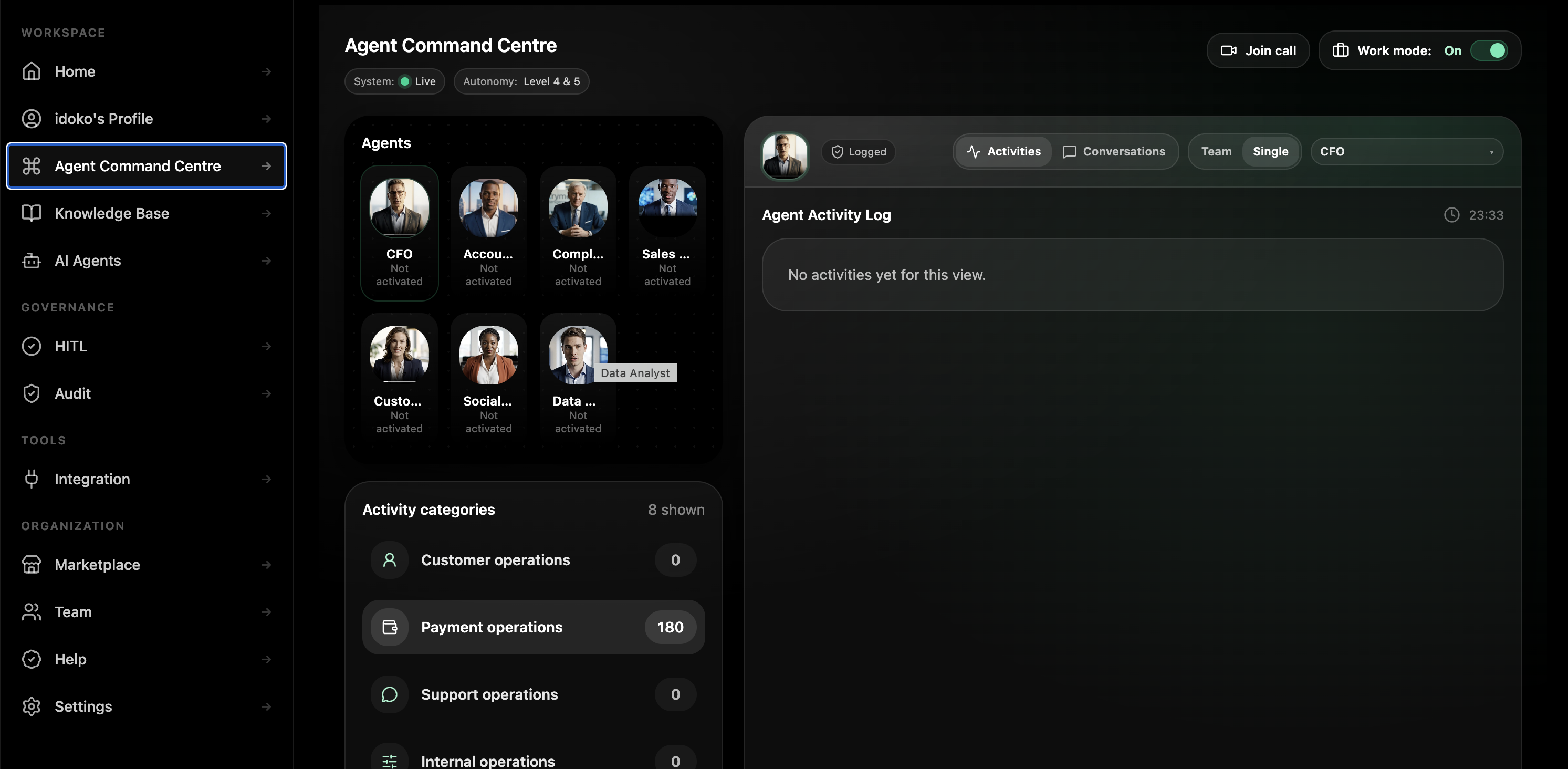
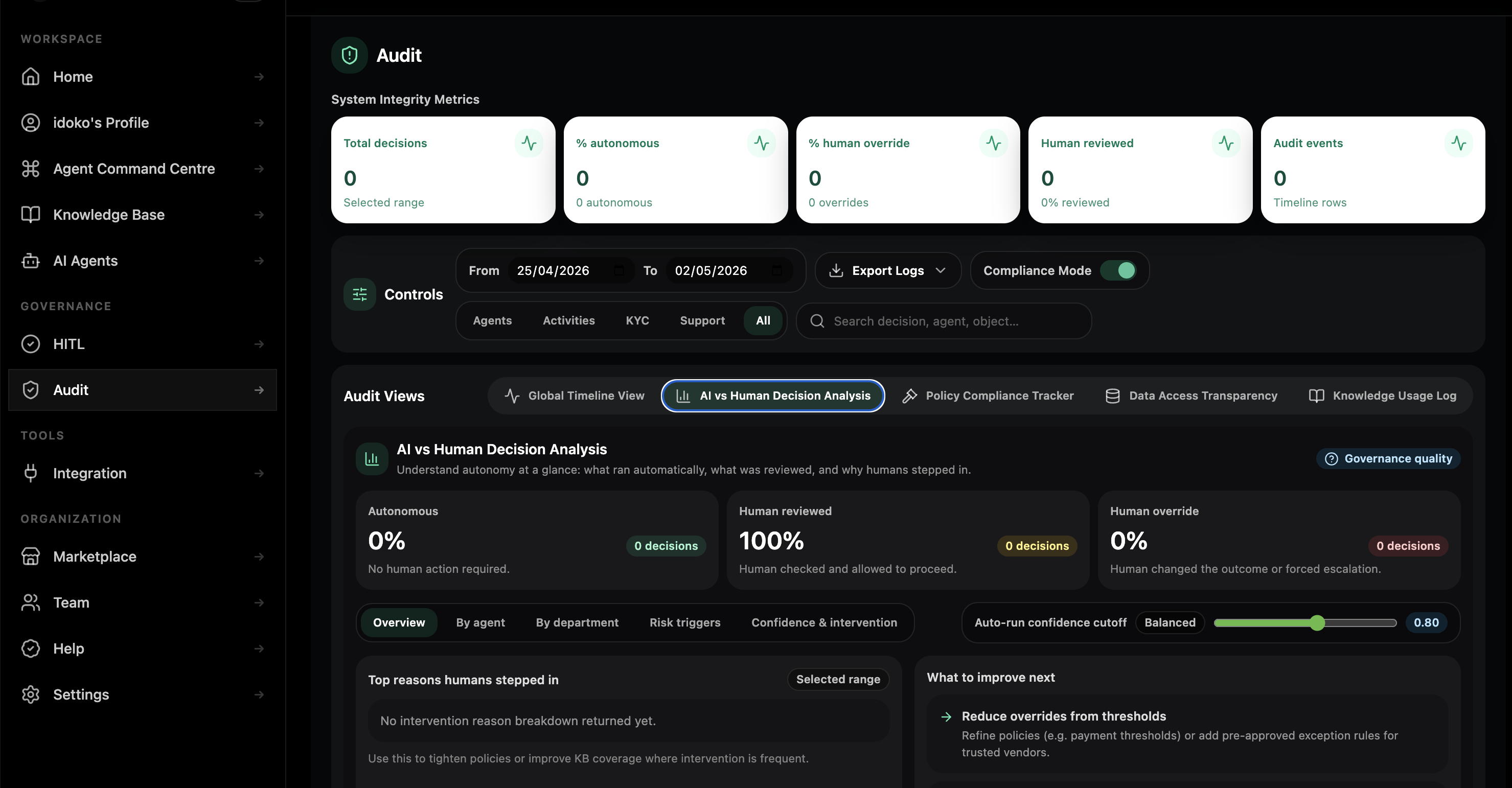
Two pre-trained agents. Five blueprints ready to deploy. Two with enterprise setup.
Two agents come pre-trained and activate on your Workspace in minutes. Five blueprints ship as chat-builder starting points, ready to deploy on your data the same day. Talent pipeline and internal comms ship with the solutions team alongside you because sourcing strategy and executive voice vary materially per firm.

HR Manager Agent
Acts as a senior HR business partner. Answers employee policy questions in your voice, drafts manager briefings, surfaces patterns in the queue, and escalates the cases that need a human HRBP with the context attached.
- Answers leave, benefits, expense, and policy questions with the source citation and the entitlement logic visible.
- Drafts manager briefings for hard conversations so the manager walks in prepared instead of improvising.
- Routes PIP, grievance, comp, and termination-adjacent cases to the named HRBP before anything reaches the employee.

Recruiter Agent
Acts as a senior recruiter’s right hand. Screens inbound CVs against the JD, schedules interviews, drafts candidate comms in the recruiter’s voice, and surfaces the candidates worth the recruiter’s hour.
- Screens inbound applicants against the role brief and the must-have criteria before the recruiter opens the ATS.
- Drafts candidate comms and schedules interviews while leaving progression and rejection decisions with the recruiter.
- Keeps the recruiter focused on assessment work instead of screening, scheduling, and inbox chase.
Day one, week two, quarter end.
What adoption looks like when one real HR queue becomes a governed people-operations fleet.
Day one
A Head of People Operations spins up a Workspace, hires the Policy Q&A Agent in one Slack channel for one country’s policy library, and watches it answer the morning’s leave, expense, and benefits questions before the team’s stand-up.
Week two
The team adds the Onboarding Concierge for the next cohort of new hires. Every new hire gets the same first-week experience, and the DPO gets read access to the action log instead of asking for screenshots.
Quarter end
HR owns a governed fleet across policy Q&A, onboarding, comp range lookup, manager briefing, and engagement analysis, with self-serve above 70% and an audit trail the next employment-law review accepts as evidence.
Why an agent platform — not an HRIS-bound AI add-on, a single-purpose AI HR tool, or another ChatGPT seat.
Most HR teams have already paid for at least two of the columns below. None solve the whole motion, and the AI tool stack added since 2023 is the line item most CFOs already want consolidated.
| Capability | Pryme Intelligence | HRIS-native AI | Standalone AI HR tools | Generic AI / ChatGPT |
|---|---|---|---|---|
| Setup time | Days | Within suite, months | Weeks to a quarter | Hours |
| Brings full employee context (HRIS + payroll + ATS + L&D + manager hierarchy + tenure) | Yes — connects to your existing stack | Within their suite only | Per-vendor connectors | None |
| Audit trail of HR decisions (employment compliance) | Immutable, exportable, queryable — every action attestable | Per-suite logs | Limited | None |
| Approvals on sensitive actions (PIP comms, comp changes, terminations) | Built-in policy engine, named approvers, your delegation of authority enforced | Within suite limits | Variable | None |
| Adapts to a policy change | Update agent in chat in minutes | Vendor release cycle | Vendor template change | Re-prompt every time |
| Multi-region employment law (UK / US / EU / country-specific) | Region-scoped agents, policy library per region, local approver chain | Within their suite — varies by vendor | Limited | Hallucinates |
| Multi-channel (Slack, Teams, email, HR portal) | Yes — wherever employees ask | Mostly portal | Mostly chat or ATS | One channel |
| Same platform as your finance, compliance, ops agents | Yes — one Workspace | No — HR-bound | No — single-purpose | No |
| Cost shape | Subscription + usage | Per-employee + AI add-on | Per-seat or per-hire | Per-seat |
Privacy- and tribunal-defensible by design.
Pryme Intelligence separates the four concerns HR teams otherwise cobble together: tenant context, the knowledge layer, the governance rail, and the runtime that logs every interaction with the employee, the data, the reasoning, and the approver.
Built for the people leaders who have to defend the answer.
CHRO / Chief People Officer
You need a people team doing strategic work, not buried in tickets. Pryme Intelligence gives you an agent layer you can defend without adding another single-purpose AI HR vendor to the stack.
Head of People Operations / HR Ops
You need fewer tickets in the queue, more time on the work that matters, and a self-serve rate that finally moves above 50%. Pryme Intelligence answers the routine, escalates the sensitive, and surfaces the patterns your team can act on.
Head of Talent Acquisition
You need recruiters spending the week assessing, not screening, scheduling, or chasing candidates. Pryme Intelligence handles the top-of-funnel mechanics so the recruiter does the conversation that hires the right person.
Head of L&D / Employee Experience
You need every new hire to get the onboarding your best manager would deliver and engagement signals that turn into actions, not decks. Pryme Intelligence drives onboarding end-to-end and reads survey responses for themes your team can act on the same week.
What changes in the first quarter.
Targets below are typical for HR teams in the first 90 days. Your numbers depend on starting state, headcount, and policy-library maturity — bring a real HR queue and we’ll model the lift on your data.
| Metric | Today (typical) | With Pryme Intelligence (target) |
|---|---|---|
| Employee policy-question response time | Hours to days | Seconds for known policies |
| Self-serve resolution rate | 20–40% | 70–85% |
| Onboarding consistency | Varies by manager | Same experience for every new hire |
| Recruiter time on screening + scheduling | 50–70% of week | Reduced 50–70%; recruiter spends time assessing |
| Manager support tickets | Repetitive queue | Drafted briefings ready before the conversation |
| Engagement survey time-to-action | 3 months | Same week |
| Leaver checklist completion | Inconsistent | 100% with audit trail |
| HR AI tool consolidation | 3–6 point tools | 1 Workspace, multi-team |
Bring a real HR queue.We'll show you what Pryme Intelligence does with it.
Thirty minutes. One channel you actually run. We’ll deploy a Pryme Intelligence HR agent on it live and walk through the audit trail it produces.
Questions HR leaders ask first.
Will an HR agent communicate with an employee about sensitive matters without my approval?
No. Sensitive-comms authority, performance-management authority, and termination-prep authority are permissions you grant, not defaults. Performance Improvement Plans, terminations, comp changes, grievance responses, and any communication touching protected categories all route to the named HRBP in your approver chain. The agent drafts, the human approves, and the action runs.
How does the audit trail satisfy employment law and works council requirements?
Every agent action — read, draft, answer, request approval, escalate, and log — is recorded in an immutable trail with the data, the prompt, the model output, the approver, the timestamp, and the system of record affected. The trail is queryable directly, exportable where co-determination applies, and structured to map to your employment-law compliance framework.
What happens when an employee asks something the agent does not know?
It escalates with context, not with a guess. When policy is ambiguous, the question touches a sensitive category, or the answer requires HRBP judgement, the agent stops, drafts the brief, and routes it to the on-duty HRBP. The employee gets an acknowledgement, and HR gets the case file.
Where does our employee data go?
Inside your Pryme Intelligence Workspace, isolated per tenant and encrypted in transit and at rest. Region-scoped deployment options for the UK, EU, US, and country-specific requirements are configured during onboarding, and Pryme Intelligence does not train shared models on your employee data.
Does Pryme Intelligence integrate with our HRIS and surrounding people stack?
Yes. Pre-built connectors cover the major HRIS platforms, ATS tools, performance and engagement systems, compensation tools, learning platforms, HR helpdesk systems, and benefits platforms. Custom systems connect through API, webhook, or the Pryme Intelligence connector SDK under the same governance rail.
Can the agent handle multi-region employment law?
Yes. Pryme Intelligence supports region-scoped agents so a UK policy agent answers from UK policy and law, a US agent answers per state, and an EU agent answers per member state with works-council awareness. Policies stay region-scoped, approver chains route locally, and the audit trail captures the jurisdiction behind every answer.
How is this different from Workday AI, Eightfold, or Lattice AI?
Pryme Intelligence covers the whole HR motion across the channels employees already use, not one slice inside one suite. Sensitive actions run through your approval chain and regional employment-law rules, and the same Workspace runs the agents your finance, compliance, support, and operations teams already use.